Honduras is standing at a critical energy crossroads. As industrial development accelerates and nationwide electricity demand experiences sustained growth, the pressure on the national grid is reaching an all-time high.
Historically, the country has relied heavily on hydropower to anchor its energy matrix. However, intensifying climate variability and prolonged periods of drought frequently compromise water levels, triggering great challenges for grid stability and power availability. To fill these generation gaps, Honduras has traditionally turned to liquid fossil fuels like diesel and bunker fuel—a costly solution that exposes the power generation operational costs to volatile international market prices.
To build a resilient economy, Honduras needs a solution that bridges the gap between sustainability and reliability. That solution lies in Liquefied Natural Gas (LNG) and Combined-Cycle Technology.
The Core Challenge: Resolving the Need for “Firm Capacity”
While rising renewable energy sources like photovoltaic and wind power are vital for the global energy transition, these technologies are inherently intermittent. A modern grid requires reliable, continuous baseload capacity, power generation that remains operational regardless of seasonal shifts, weather conditions, or environmental disruptions.
Without this “firm capacity,” the grid remains vulnerable to blackouts and unforeseen operational costs.
The Strategic Advantage of LNG and Combined-Cycle Plants
Liquefied Natural Gas (LNG) paired with modern combined-cycle power plants represents the most efficient, large-scale thermal energy generation technology available today. This infrastructure offers three transformational benefits for Honduras:
- Strategic Fuel and Partner Reliability: The United States market has emerged as a global energy powerhouse, currently supplying nearly one-quarter of the world’s LNG exports. Given its geographic proximity, Honduras is perfectly positioned to secure a direct, reliable commercial relationship with this robust market, significantly reducing the risk of supply chain disruptions.
- Cost Stability and Lower Emissions: Transitioning from costly liquid fossil fuels to natural gas introduces long-term price predictability into the electricity system. Furthermore, natural gas-powered plants drastically reduce environmental emissions compared to conventional thermal energy generation technologies, supporting a more efficient, cleaner economic growth.
- The Reliable Complement to Renewables: Combined-cycle plants provide the rapid operational flexibility needed to back up the grid when renewable output drops, ensuring voltage support, frequency stability, and ultimate grid resilience.
Unlocking Regional Potential via Central American Electrical Interconnection System (SIEPAC)
Securing the domestic grid does not only solve a local challenge, but it also unlocks an international business opportunity. By strengthening its firm generation capacity, Honduras can capitalize its connection to the Central American Electrical Interconnection System (SIEPAC in Spanish). Instead of generating enough output to meet the domestic market’s demand, , Honduras can transform into a strategic regional exporter, trading its electricity excess and supporting in stabilizing neighboring grids across Central America.
How to Move Forward: Bankable Infrastructure
Transitioning a nation’s energy mix requires sophisticated engineering, world-class technology, and robust financial structuring. Developing large-scale LNG-to-power infrastructure relies heavily on aligning projects with international financial institutions, public-private partnerships (PPPs), and multilateral development banks to ensure long-term viability.
Download the Full Whitepaper
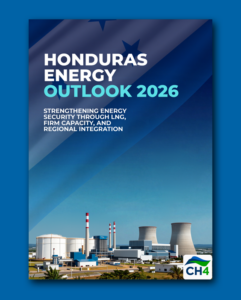 Get the complete, data-driven analysis on how Honduras can reshape its energy future.
Inside the full report, you’ll find:
- Deep-Dive Grid Analysis: A technical diagnosis of Honduras’ growing energy demand and the urgent need for “firm capacity” over weather-dependent hydropower
- The LNG Strategic Advantage: How leveraging U.S. natural gas markets can stabilize operational costs and significantly reduce industrial emissions.
- Grid Resilience & Interconnection: The role of combined-cycle plants as flexible backup for renewables and as a gateway to regional electricity trading via SIEPAC.
- Bankable Financial Blueprints: Proven strategies to finance large-scale energy infrastructure to attract international private capital and multilateral banks.
Disclaimer: This document is provided for informational and analytical purposes only. It does not constitute legal, financial, or compliance advice. Companies and institutions must conduct their own due diligence prior to any engagement